Eco Friendly - Green Friendly - Earth Friendly
On April 22, 1970 our nation began to take a turn for the better by establishing what we know as Earth Day, a conscious human effort towards cleaning up our environment.
I remember when this nation celebrated the first Earth Day; it was back in the peace, love and hippy days of my youth. That day a great unified and organized call went out to stop polluting our environment.
I would like to take the time to address one of the simplest and cost free way we all make a difference. Most of the baby boomers remember the first prime time commercial about the evils of littering, especially the dear aging Native American dressed in traditional clothing standing along the highway with a tear running down his cheek, litter was disgracing the land his people once held so dear.
Today's "don't litter" commercials are public service announcements appearing on television in the middle of the night when most of us are sound asleep. That little "Give a Hoot," owl is well meaning although not seen enough, the Hooter's chain of restaurants gets more exposure than that poor little owl, please excuse the pun.
The first time I heard Earth Day's message I made a commitment never to litter and I have proudly kept that promise. Although I don't remember a time when I did litter, the concept of the earth as my personal garbage dump never made sense to me.
Because of the efforts of many earth friendly, passionate people, many more people are now aware of the issues and are striving to minimize pollutants wherever they can.
People envision these mountains as pristine, an oasis of beauty, unspoiled by mankind's dark hand. And, yes there are such pristine places within the majestic beauty and wilds of the highlands. Although, it never ceases to amaze us when we see garbage thrown along side our roads and waterways or in picnic areas and fire pits when trash disposals are just a short walk away. Who are these people and why do they think it is ok to throw their garbage anywhere other than a trash or recycle container? Although it isn't the most noticeable, one of my personal pet peeves are cigarette butts, regardless of what some might think....cigarette butts are not biodegradable.
About a hundred years ago these mountains were nearly completely laid to waste by uncontrolled logging. The U.S. Agricultural Department stepped in arming the Civilian Conservation Corps with tools to build roads, trails and millions of tree sapling to plant. They once again brought beauty and grace to these mountain slopes and their clean cascading waterways and lakes. The logging companies are no longer the problem, nor should it be the National Forest Service's responsibility to clean up after inconsiderate individuals. It is the responsibility of each individual visitor and resident to do their part to keep these mountains free of litter and pollutants.
We can all enjoy both the private and public lands of this vast and pristine high-country, partaking in the pure mountain experience. The beauty and serenity of these mountains are unrivaled, welcoming new comers and visitors each and everyday. It is the responsibility of every individual who also loves and respects these mountains to "help keep the mountains clean."
In our travels, we have noticed that the parks and forest services not only have trash cans for visitor's use, but many are also adding a variety of recycle bins dividing the options for paper, plastic and glass. Please take the few extra minutes it takes to sort your trash into the recycle bins whenever possible.
After decades of devotion to the cause we are not out of the woods concerning these matters, this is an on-going continuous effort we all need to participate in. Pollution is something mankind has created and only mankind can conquer the problem, one conscience step at a time.
Since the first Earth Day we have developed more titles to support our ever-growing concern such as eco-friendly and green friendly to bring attention to such matter as conservation and the elimination of toxic chemicals.
Get involved with the movement; it will take the masses to make a real change. As individuals we can make a difference, each time we make a responsible choice we enrich our life, our health and the future of our planet.
Respect the earth and the earth will respect you. "Give a hoot...don't pollute." Consider this a public service announcement from the Blue Ridge Highlander, and thank you.
Your Friends at the Highlander
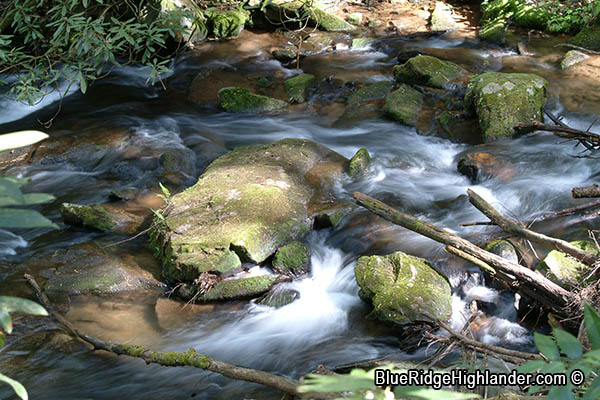
Below are a few Helpful Hints and links to learn more about how you can become more Eco-Friendly and Green-Friendly
Never Litter Under Any Circumstance • In the state of Georgia alone, the D.O.T. spends $20 million annually on roadside trash. That's money that could have gone to solar panels or planting trees and flowers. • The several trillion toxic cigarette butts littered worldwide annually are responsible for fatal fires and the deaths of numerous mammals, birds and reptiles who eat them. Information courtesy of: www.StopLittering.com Recycle Paper, Plastics, Aluminum and Glass Recycling is one of the easiest ways for people to take action on behalf of the environment, a way to Make Every Day Earth Day™. Recycling reduces the amount of waste in landfills, and prevents hazardous materials from leaking into our soil and water systems. Consider the following: The average person generates 4.5 pounds of trash every day The EPA estimates that 75 percent of solid waste is recyclable, while only about 30 percent is recycled. An aluminum can is recycled and back on the grocery shelf to be purchased again in as little as 60 days; a glass bottle takes as little as 30 days. One gallon of improperly disposed motor oil can contaminate one million gallons of fresh water. Use Alternatives to Chemical Pesticides and Fertilizers Lawn pesticides and fertilizers can contaminate surface and groundwater. This diminishes the quality of our drinking water as well as the quality of aquatic habitats and health of aquatic life forms. Many fish and aquatic insect species are highly sensitive to fertilizers and pesticides. Children are the most vulnerable segment of our population due to their small size and their underdeveloped physiology. Children are also often the most exposed to pesticides due to their behavior (putting contaminated grass, soil and toys into mouth, breathing close to the ground). Increased exposure puts children at an unacceptably high risk from lawn pesticides. Use Earth Friendly Cleaning Products Most conventional dish and laundry detergents are made from petroleum, a nonrenewable resource. Some detergents contain alkyphenol ethoxylates, which are suspected hormone disruptors that don't readily biodegrade and can threaten wildlife after they go down your drain. Ethoxylated alcohols in liquid detergents can contain carcinogenic 1,4-dioxane. Aerosol propellants contain flammable and nerve-damaging ingredients as well as tiny particles that can lodge in your lungs. Fragrances of all kinds can provoke allergic and asthmatic reactions. Instead if the air outside is clean, open your windows and ventilate the natural way. An open box of baking soda removes odors. (If you're feeling Martha Stewart-ish, you can decant it from the box into a pretty bowl.) Cedar blocks or sachets of dried flowers and herbs provide gentle scents -- but avoid any potpourri that lists unspecified "fragrance" on the label; this could mean synthetic chemicals, including phthalates. Look for products scented with essential plant oils, such as lemon, verbena, or lavender. Buy and Grow Organic Produce Keep Chemicals off Your Plate Many pesticides approved for use by the EPA were registered long before extensive research linking these chemicals to cancer and other diseases had been established. Now the EPA considers that 60 percent of all herbicides, 90 percent of all fungicides and 30 percent of all insecticides are carcinogenic. A 1987 National Academy of Sciences report estimates that pesticides might cause an extra 1.4 million cancer cases among Americans over their lifetimes. The bottom line is that pesticides are poisons designed to kill living organisms and can also be harmful to humans. In addition to cancer, pesticides are implicated in birth defects, nerve damage, and genetic mutation. Help Small Farmers Although more and more large scale farms are making the conversion to organic practices, most organic farms are small, independently owned and operated family farms of less than 100 acres. It's estimated that the United States has lost more than 650,000 family farms in the past decade. And with the U.S. Department of Agriculture predicting that half of this country's farm production will come from 1 percent of farms by the year 2000, organic farming could be one of the few survival tactics left for family farms. Buy Organic Meat and Poultry Free of Antibiotics, added Hormones, GMO Feed and other Drugs; no GMO Animals Animals raised organically are not allowed to be fed antibiotics, the bovine human growth hormone (rbGH), or other artificial drugs. Animals are also not allowed to eat genetically modified foods. Further, animal products certified as organic can not have their genes modified (for example, a scorpion gene cannot be spliced into a cow gene). How: The animals are raised in a healthier environment, fed organic feed, and often eat a wider range of nutrients than those raised in factory farms (such as would be the case of free-range chickens and ranch cattle). The animals are not from a test tube. Information courtesy of: www.Care2.com/greenliving/why-buy-organic-dairy-meat.html Buy Canvas Grocery Bags or Recycle the Ones You Already Have Hundreds of thousands of sea turtles, whales and other marine mammals die every year from eating discarded plastic bags mistaken for food. Turtles think the bags are jellyfish, their primary food source. Once swallowed, plastic bags choke animals or block their intestines, leading to an agonizing death. On land, many cows, goats and other animals suffer a similar fate to marine life when they accidentally ingest plastic bags while foraging for food. In a landfill, plastic bags take up to 1,000 years to degrade. As litter, they breakdown into tiny bits, contaminating our soil and water. When plastic bags breakdown, small plastic particles can pose threats to marine life and contaminate the food web. A 2001 paper by Japanese researchers reported that plastic debris acts like a sponge for toxic chemicals, soaking up a million fold greater concentration of such deadly compounds as PCBs and DDE (a breakdown product of the notorious insecticide DDT), than the surrounding seawater. These turn into toxic gut bombs for marine animals which frequently mistake these bits for food. Information courtesy of: www.reusablebags.com/facts.php?id=2 Encourage the Development of Clean Alternative Fuels Unlike other renewable energy sources, biomass can be converted directly into liquid fuels, called "biofuels," to help meet transportation fuel needs. The two most common types of biofuels are ethanol and biodiesel. Ethanol is an alcohol, the same as in beer and wine (although ethanol used as a fuel is modified to make it undrinkable). It is made by fermenting any biomass high in carbohydrates through a process similar to beer brewing. Today, ethanol is made from starches and sugars, but NREL scientists are developing technology to allow it to be made from cellulose and hemicellulose, the fibrous material that makes up the bulk of most plant matter. Ethanol is mostly used as blending agent with gasoline to increase octane and cut down carbon monoxide and other smog-causing emissions. Biodiesel is made by combining alcohol (usually methanol) with vegetable oil, animal fat, or recycled cooking grease. It can be used as an additive (typically 20%) to reduce vehicle emissions or in its pure form as a renewable alternative fuel for diesel engines. Information courtesy of: www.nrel.gov/learning/re_biofuels.html
Turn off the TV or Video Game and go to the Mountains Everybody needs beauty as well as bread, places to play in and pray in where nature may heal and cheer and give strength to the body and soul. Keep close to Nature's heart...and break clear away, once in awhile, and climb a mountain or spend a week in the woods. Wash your spirit clean.~ John Muir
A few Helpful Kid Links A Helpful link to a Kid's Source for Recycling sent to the Highlander by Mary Lowe www.ecy.wa.gov/programs/swfa/kidspage/
Energy Facts The United States uses a lot of energy - nearly a million dollars worth each minute, 24 hours a day, every day of the year. With less than five percent of the world's population, we consume about one fourth of the world's energy resources. We are not alone. People in Asia and Europe also use a large amount of energy. You can save energy and money by installing insulation, maintaining and upgrading the equipment, and practicing energy-efficient behaviors. A two-degree adjustment to your thermostat setting (lower in winter, higher in summer) can lower heating bills by four percent and prevent 500 pounds of carbon dioxide from entering the atmosphere each year. Programmable thermostats can automatically control temperature for time of day and season. www.eia.doe.gov/kids/energyfacts/saving/efficiency/savingenergy.html#EfficiencyConservation |
Your e-mail addresses will not be sold or given away to anyone.
Let our visitors tell you about the Highlander...
Click the feathers to go to the Highlander site
map...

Highlander Special Interests
Great Mountain Attractions and Destinations Links to All Highlander Advertisers
Blue Ridge Highlander Mountain Emporium Art Gallery Photo Gallery Handmade Products Book Store
Magazine, Virtual Tours and Scenic Road Trips Creative Mountain Classes Just for Kids
Living Green and Eco Friendly in the Mountains Gardening in the Mountains Mountain Recipes
Mountain and Native American History Nathanael O. Smith - Storyteller Mysteries, Myths and Legends in the Mountains
Mountain Cathedral Charities and Fundraisers
Great Mountain Retreats
Adventure • Art • Cooking • Corporate • Family • Friend • Yoga • Wellness • Youth
Learn More About the Towns and Cities in the Mountains
North Georgia Mountains Western North Carolina Mountains
Up Country South Carolina Tennessee River Valley and Mountains
Great Smoky Mountains Blue Ridge Parkway
Move to or Invest in the Mountains
Real Estate • Log Homes • Cabins • Homes • Land • Acreage • Commercial Real Estate
North Georgia Mountain Real Estate Western North Carolina Real Estate
Tennessee River Valley and Smoky Mountain Real Estate
Interior Design and Furniture Shops Schools in the Mountains
Traveling • Living • Enjoying the Mountains
Log Cabin Rentals • Vacation Rentals • Resorts • Condos • Inns • Hotels • Bed and Breakfasts
Luxury Resorts and Spas in the Blue Ridge and Smoky Mountains
North Georgia Mountain Lodging Western North Carolina Lodging Tennessee River Valley Lodging
Plan a Mountain Wedding or Gatherings Conference, Meeting and Retreat Facilities
Vineyards • Wineries • Tasting Rooms Agri-Tourism Farmer's Markets
Yoga Retreats • Spas in the Mountains
Events and Festivals in the Mountains Theatre • Concerts • Mountain Entertainment
Restaurants, Dining and Catering in the Mountains
Shopping in the Mountains Blue Ridge Highlander Mountain Emporium and Art Gallery
Artists, Art Galleries and Art Associations in the Mountains Museums, History and Culture in the Mountains
Family Fun in the Mountains Just for Kids
Adventure and Outdoor Fun in the Mountains
Mountain Adventure Horseback Riding, Stables and Trails Mountain Bike Trails
White Water Rafting and Adventure Zipline • Canopy Tours Fishing in the Mountains
Boating and Marinas Camping and RV Parks ORV Adventures
Scenic Mountain Drives Mountain Golf Courses Mountain Day Use and Picnic Areas
National Parks in the Mountains National Forest Service in the Mountains State Parks in the Mountains
Waterfalls in the Mountains Lakes in the Mountains Rivers, Creeks and Trout Streams in the Mountains
Nature and Wildlife in the Mountains Mountain Birding Hiking Trails in the Mountains
More Information
Home Site Map Advertise on the Highlander Link to the Highlander Contact the Publisher
designed, produced and hosted by
